
I used to think being capable meant I should carry it.
If I could solve it, I did.
If I could help, I did.
If I could handle more, I did.
And for a long time, I believed that made me responsible, dependable, successful, and even faithful. Well, that was until I started learning that capacity and assignment aren’t the same thing.
Just because I can carry something doesn’t mean it belongs in my hands. Crazy, right? But listen, learning that has changed the way I live, the way I understand my relationship with God, and the way I help other women heal.
I’ve been the woman I help.
I know what it’s like to be praised for being responsible while quietly wondering why everything feels so heavy.
I’ve been the woman who needs a plan, clear instructions, communicated expectations, and, if we’re honest, a rubric too, just so I can make sure I’m doing everything exactly right!
I’ve confused preparation with safety, productivity with progress, and being needed with being valuable.
And thankfully, before I got too lost in my cycle, God started teaching me something completely different.
I didn’t need to be more capable, work harder, create more structure, or pray more.
I needed to understand what shaped the way I thought, related, responded, and performed. Heal the beliefs I’d carried for years. Learn how to rest without assuming something would fall apart. I needed to discover that trusting God sometimes looked less like doing more for Him and more like trusting that He is still God even when I stop doing.
I learned how to carry my life without carrying my worth.
And over time, my life became lighter — not because my responsibilities disappeared, but because I stopped making everything my responsibility.
My story informs my work. My training gives me the tools to do it well.
I’m not here to give you a professional version of “just pray about it”. And I have no interest in telling you to separate your faith from your experiences, relationships, emotions, and the beliefs that have shaped you.
I’m a faith-based therapist because I believe all of you deserves to take up space.
That means we can explore the childhood experiences that taught you to earn love and the way that belief may be influencing how you relate to God today.
We can identify the cognitive distortions fueling your anxiety and examine the biblical truth that challenges it.
We can talk about boundaries, nervous system responses, attachment, emotional regulations, grief, trauma, relationships, identity, rest, perfectionism, people-pleasing — AND faith. Not as competing parts, but as parts that have made you, YOU.
My faith complements my clinical lens. It doesn’t replace it.

Therapy with me feels like working with a human Sour Patch Kid.
At first, I may ask you to do something you don’t like (sour), but then I’m going to sit with and support you through it (sweet). Also, I’m human, so there is no blank face, curated response — only real reactions and authentic experiences.
We’re going to get curious, make connections, name patterns, and (my favorite part) CELEBRATE the moment you realize “Wait, I don’t even do that anymore”.
Sometimes I may ask you a question that welcomes uninvited tears, and other times we’ll laugh together through it all.
My goal isn’t to make you dependent on therapy. It’s to help you understand yourself deeply enough to trust yourself outside of it.
The goal is for you to reach the point where you sit down and say:
“Life is actually really good. I don’t even know what we’re supposed to talk about”.
Clinically grounded.
Spiritually rooted.
Very much human.
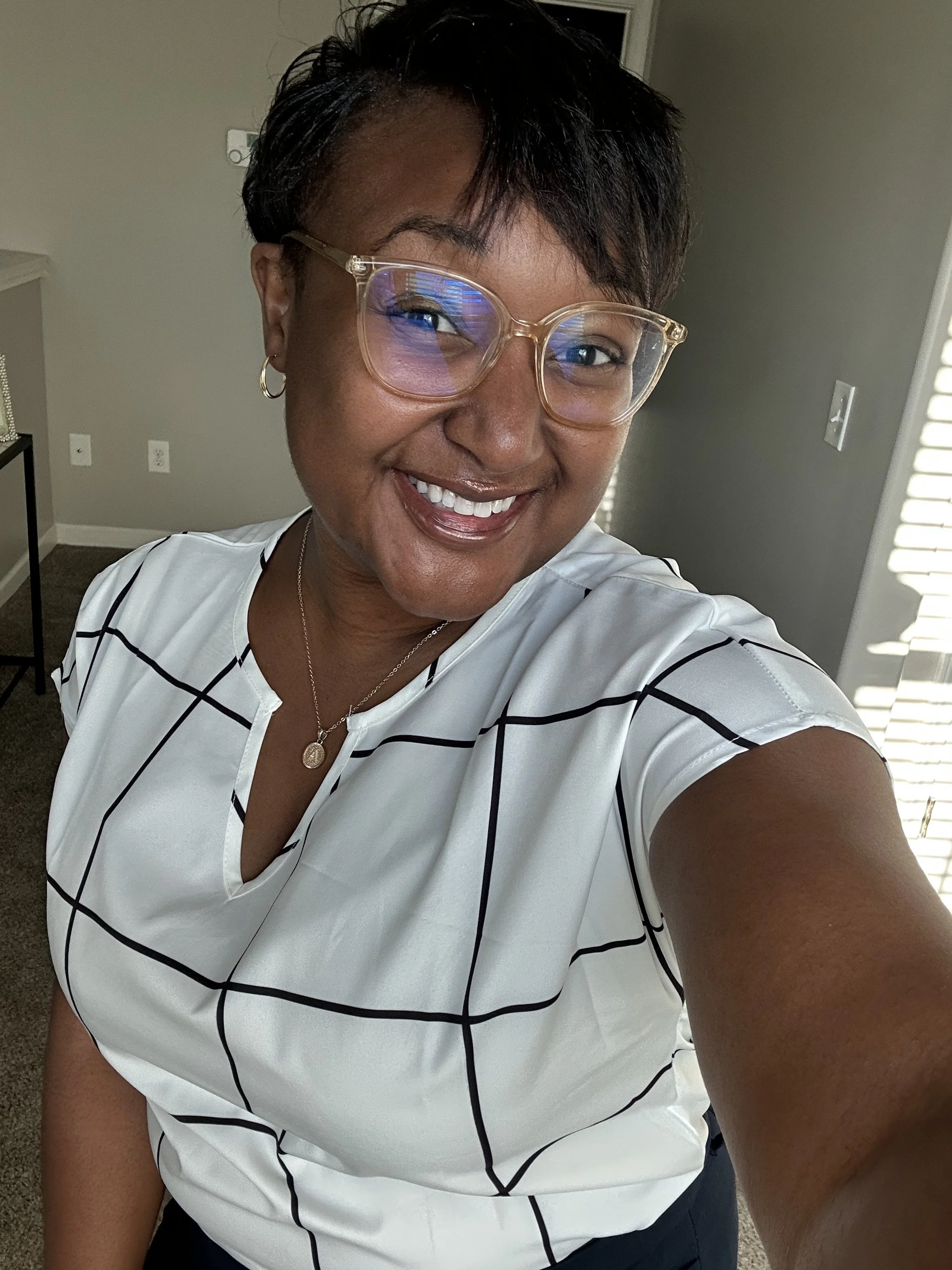
Ayana Boyd, A-LPC/MHSP is a faith-based therapist, educator, and speaker serving women throughout Tennessee.
My clinical approach is integrative and tailored to the woman sitting in front of me. I draw from evidence-based and trauma-informed approaches to help women understand the beliefs, experiences, emotions, and relational patterns influencing how they live today.
Education
M.S., Clinical Mental Health Counseling
B.S., Psychology
Clinical Approaches
CBT • DBT • Brainspotting • Narrative Therapy • Motivational Interviewing • ACT • Person-Centered Care
Areas I especially love working with
Identity • Anxiety • Overfunctioning • Boundaries • Perfectionism • People-Pleasing • Childhood Patterns • Faith & Mental Health • Relationships • Self-Worth
I learned life is better when I’m actually in it.
When I’m not “therapizing” the healing woman, I’m more than likely doing one of several things:
lifting something unnecessarily heavy at the gym.
talking to God like He’s my diary — iykyk.
creating something because apparently every idea needs my attention.
being childlike with my equally childlike husband.
enjoying, embracing, and protecting a slow morning like my life depends on it (because it lowkey does).
brunching, happy hour-ing, or just living with the people who brighten my life.
bonding with my couch while I binge-watch one of the thousands of shows that have made it to my favorites list.
Enough about me. Let's talk about you.
You’re really good at carrying. People look at you and say, “Dang, she carries everything so effortlessly,” but you’re starting to wonder how long you actually have to carry this version of life.
It’s exhausting, isolating, and sometimes, infuriating. And honestly, you’re probably starting to notice that the life you’ve built around responsibility, achievement, service, and faithfulness has left very little room for you, which is confusing because whose life is it if you’re not in it?
I’m not here to teach you how to abandon responsibilities or give up on everything. I’m here to help you become more intentional about what you take responsibility for.
Because there’s a huge difference between carrying what you’ve been purposed to carry and carrying everything you’re capable of holding.
I believe there’s a version of your life where you can still be generous, ambitious, dependable, faithful, and deeply loving without ever needing to prove your worthiness through doing.
So, are you ready to find out what’s actually yours to carry?